Deep learning · 2024
Deepfake Detection
A forensic pipeline that turns images into Error Level Analysis heatmaps and classifies them with a fine-tuned EfficientNet-B0, at 86.4% accuracy (F1 86.1%) on 2,000 unseen FaceForensics++ images.
- accuracy, 2,000 unseen validation images
- 86.4%
- precision
- 88.0%
- recall
- 84.3%
Intended use
Edited faces are now hard to see. Their compression history is not.
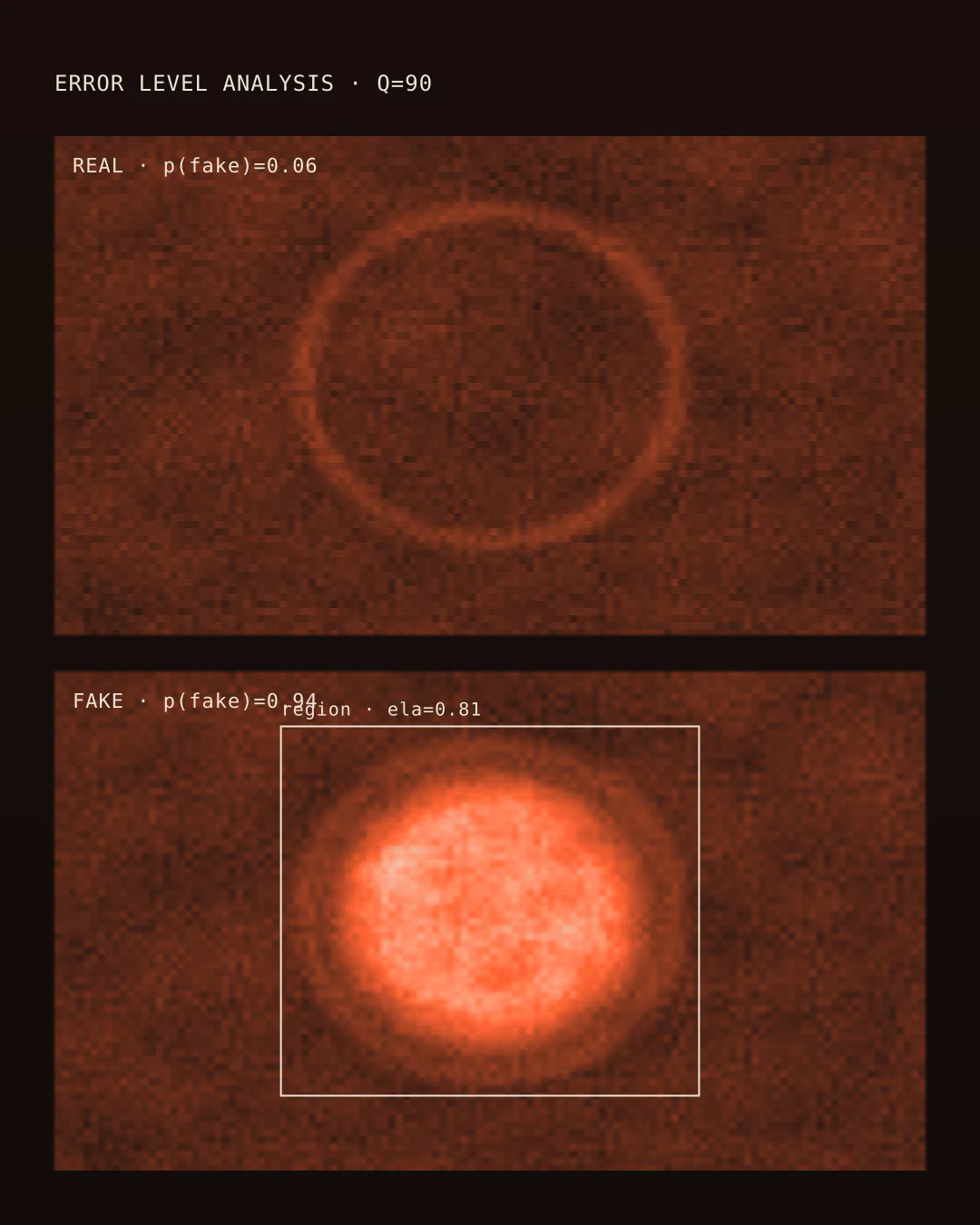
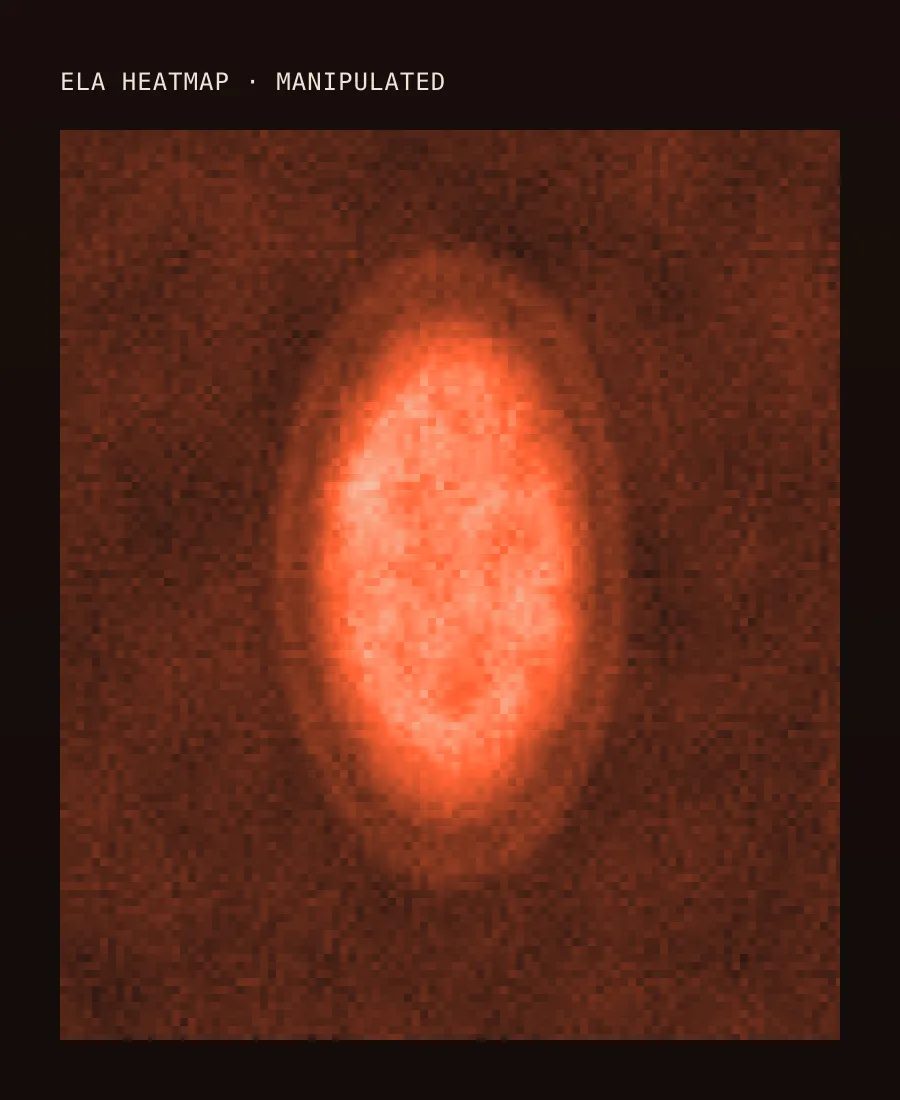
When part of a JPEG is edited, that region has been compressed fewer times than the rest. Error Level Analysis resaves the image and measures the difference, so edited regions glow. A fine-tuned EfficientNet-B0 then learns to read those heatmaps.
Architecture
Decisions
- Feed the model forensics, not pixels. Classifying ELA heatmaps instead of raw images makes the signal the model learns explicit.
- Transfer, don't train from scratch. EfficientNet-B0 starts from ImageNet weights and is fine-tuned end to end.
- Different speeds for different layers. The backbone learns at 5e-5 to keep its edge filters; the head learns at 1e-3 with cosine annealing.
Results & evaluation
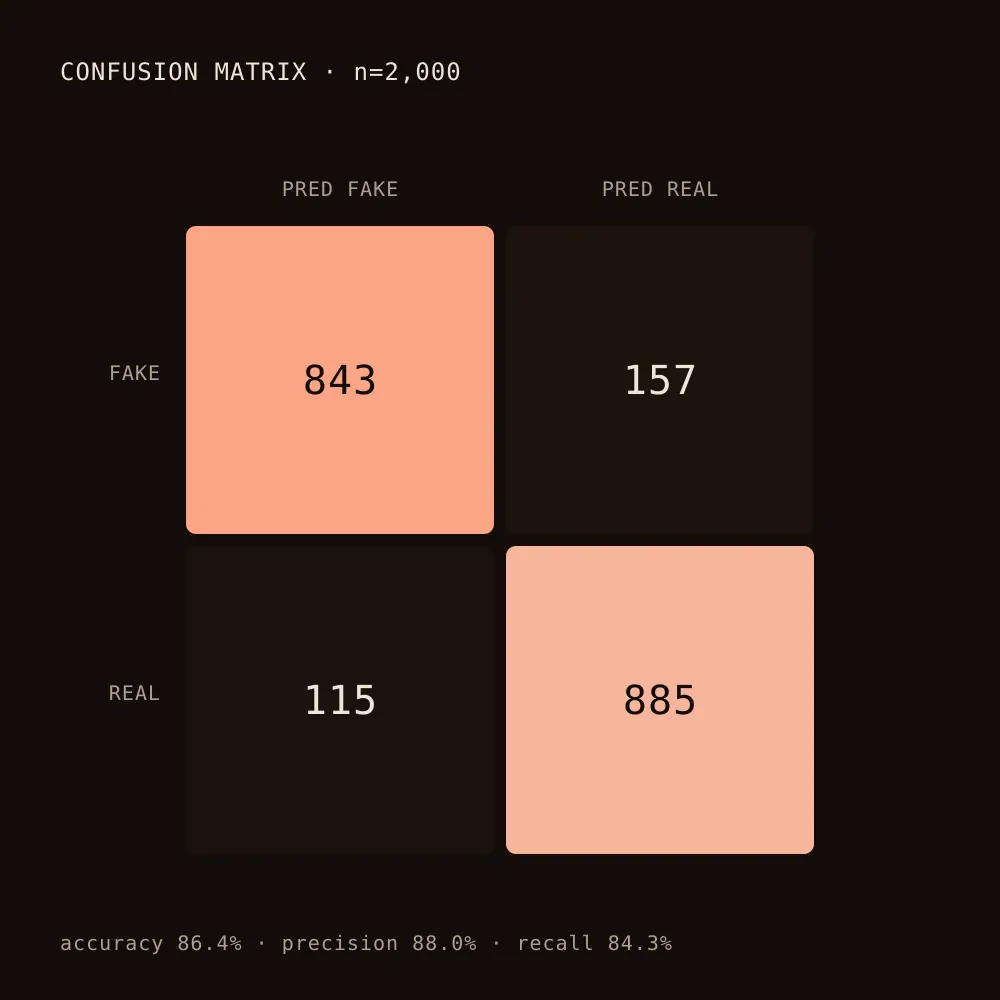
- accuracy, 2,000 unseen validation images
- 86.4%
- precision
- 88.0%
- recall
- 84.3%
Limitations & next steps
- ELA depends on JPEG history; PNGs and heavily recompressed images weaken the signal.
- Trained and validated on a balanced 10,000-frame subset of FaceForensics++ (80/20 split). The 2,000 validation images also chose the best epoch, so the figures are slightly optimistic; a separate test split is the next measurement.
- One benchmark: other generators may behave differently.
- Next: combine ELA with frequency-domain features and test on newer diffusion models.